RAM selection for gaming builds involves balancing capacity, speed, latency, and budget across an increasingly
complex memory landscape. The DDR4 to DDR5 transition creates additional decision complexity—both standards remain
viable for gaming, each with distinct value propositions depending on platform and budget.
Gaming RAM requirements have stabilized around clear minimums while performance optimization continues evolving.
Understanding what actually matters for gaming performance versus marketing specifications helps avoid overspending
on memory that provides negligible gaming benefit.
This comprehensive guide examines gaming RAM selection in 2026, comparing DDR4 and DDR5, analyzing speed and latency
impact, and recommending specific kits across price tiers and platforms.
I. Gaming RAM Fundamentals
Understanding RAM specifications helps evaluate marketing claims versus actual performance impact.
Capacity Requirements
16GB: The gaming minimum in 2026. Adequate for gaming and light multitasking. May experience memory
pressure in modern titles with background applications.
32GB: The recommended gaming standard. Comfortable headroom for demanding games, streaming, browser
tabs, and Discord simultaneously. Best value for most gaming builds.
64GB: Overkill for pure gaming. Justified for content creation, video editing, or professional
workloads alongside gaming. Not recommended solely for gaming benefit.
Speed and Frequency
RAM speed (measured in MHz or MT/s) affects data transfer rates. Higher speeds provide modest gaming
improvements—typically 1-5% depending on title and resolution.
DDR4 Sweet Spot: 3200-3600 MHz
DDR5 Sweet Spot: 6000-6400 MT/s
Latency Considerations
CAS latency (CL) measures response delay in clock cycles. Lower latency provides faster response times, partially
offsetting speed advantages of higher-frequency RAM.
True latency combines frequency and CL timing—higher speed with higher latency may not outperform lower speed with
tighter timings. Evaluate true latency (ns) rather than CL alone.
II. DDR4 vs DDR5 for Gaming
The generational transition creates platform-specific decisions.
DDR4 Overview
Availability: Intel 12th/13th/14th gen (DDR4 motherboards); AMD Ryzen 7000 NOT compatible
Pricing: $40-70 for 32GB quality kits
Speeds: 2666-4800 MHz, with 3200-3600 MHz being optimal
Advantages: Lower cost, mature stable platform, excellent availability
DDR5 Overview
Availability: Intel 12th gen+ (DDR5 motherboards); AMD Ryzen 7000 (DDR5 only)
Pricing: $80-150 for 32GB quality kits
Speeds: 4800-8000+ MT/s, with 6000-6400 MT/s being optimal
Advantages: Higher bandwidth, future platform, better high-refresh gaming
Gaming Performance Comparison
| Scenario | DDR4 3600 CL16 | DDR5 6000 CL30 | Difference |
|---|---|---|---|
| 1080p Gaming | Baseline | +3-8% | Noticeable at high FPS |
| 1440p Gaming | Baseline | +2-5% | Modest improvement |
| 4K Gaming | Baseline | +0-2% | GPU-limited, minimal |
| Kit Price (32GB) | $55 | $100 | DDR5 costs ~2x |
Platform Recommendations
AMD Ryzen 7000: DDR5 required—no choice. Target 6000 MT/s for optimal infinity fabric
synchronization.
Intel (Budget Build): DDR4 provides significant cost savings with minor performance sacrifice. Best
value approach.
Intel (Performance/Future Build): DDR5 provides maximum performance and platform longevity.
Recommended for high-end builds.
III. AMD Ryzen Memory Optimization
AMD platforms have specific memory considerations.
Infinity Fabric and 6000 MT/s
Ryzen 7000 series achieves optimal performance when memory frequency aligns with Infinity Fabric (FCLK). 6000 MT/s
enables 1:1 ratio with 3000 MHz FCLK—the sweet spot for most chips.
Higher speeds (6400+ MT/s) may require 2:1 mode or not be achievable on all chips, potentially reducing benefits.
6000 MT/s represents the reliable optimal target.
EXPO Profiles
AMD’s EXPO (Extended Profiles for Overclocking) provides tested XMP-equivalent profiles optimized for Ryzen. Look for
EXPO-certified kits for Ryzen 7000 builds to ensure compatibility and optimal timings.
IV. Intel Memory Optimization
Intel platforms offer DDR4/DDR5 choice depending on motherboard.
DDR4 Optimization
Intel’s memory controller handles high-speed DDR4 well. 3600 MHz with tight timings (CL16) provides optimal balance.
Higher speeds provide diminishing returns.
DDR5 Optimization
Intel 12th-14th gen benefits from DDR5 bandwidth, particularly in productivity workloads. Gaming benefits are modest
but real at high refresh rates. 6000-6400 MT/s with reasonable timings provides good balance.
Gear 1 vs Gear 2
Intel’s memory controller runs in Gear 1 (synchronized) or Gear 2 (divided) mode. Gear 1 provides better latency but
limits maximum frequency. For DDR5, Gear 2 is typically required at higher speeds, partially offsetting bandwidth
gains.
V. Speed and Latency Balance
Understanding true latency clarifies RAM value.
Calculating True Latency
True latency (in nanoseconds) = (CL / Frequency in MHz) × 2000
Example comparisons:
• DDR4-3600 CL16 = (16 / 3600) × 2000 = 8.89 ns
• DDR5-6000 CL30 = (30 / 6000) × 2000 = 10.0 ns
• DDR5-6000 CL36 = (36 / 6000) × 2000 = 12.0 ns
Fast DDR4 has better latency than slow DDR5, but DDR5’s higher bandwidth compensates for latency in
bandwidth-dependent tasks.
Gaming Impact
Gaming benefits from both low latency (response time) and high bandwidth (data transfer). The balance depends on game
optimization—some titles are latency-sensitive, others bandwidth-sensitive.
VI. Best Gaming RAM Recommendations
Best DDR4 Gaming RAM
Budget: Teamgroup T-Force Vulcan Z 32GB (2x16GB) DDR4-3200 CL16 – $50-60
Solid gaming kit at entry pricing. 3200 MHz handles gaming well without premium pricing for marginal speed gains.
Value: G.Skill Ripjaws V 32GB (2x16GB) DDR4-3600 CL16 – $55-65
The DDR4 sweet spot. 3600 MHz CL16 provides excellent gaming performance. Outstanding value for Intel DDR4 builds.
Premium: G.Skill Trident Z Neo 32GB (2x16GB) DDR4-3600 CL14 – $90-110
Samsung B-die for maximum DDR4 performance. Slightly tighter timings for enthusiast optimization.
Best DDR5 Gaming RAM
Budget: Kingston Fury Beast 32GB (2x16GB) DDR5-5200 CL40 – $80-95
Entry DDR5 pricing with reasonable performance. Adequate for builds prioritizing other components.
Value: G.Skill Trident Z5 32GB (2x16GB) DDR5-6000 CL30 – $100-120
The DDR5 sweet spot for AMD Ryzen 7000. 6000 MT/s with CL30 balances speed and latency excellently.
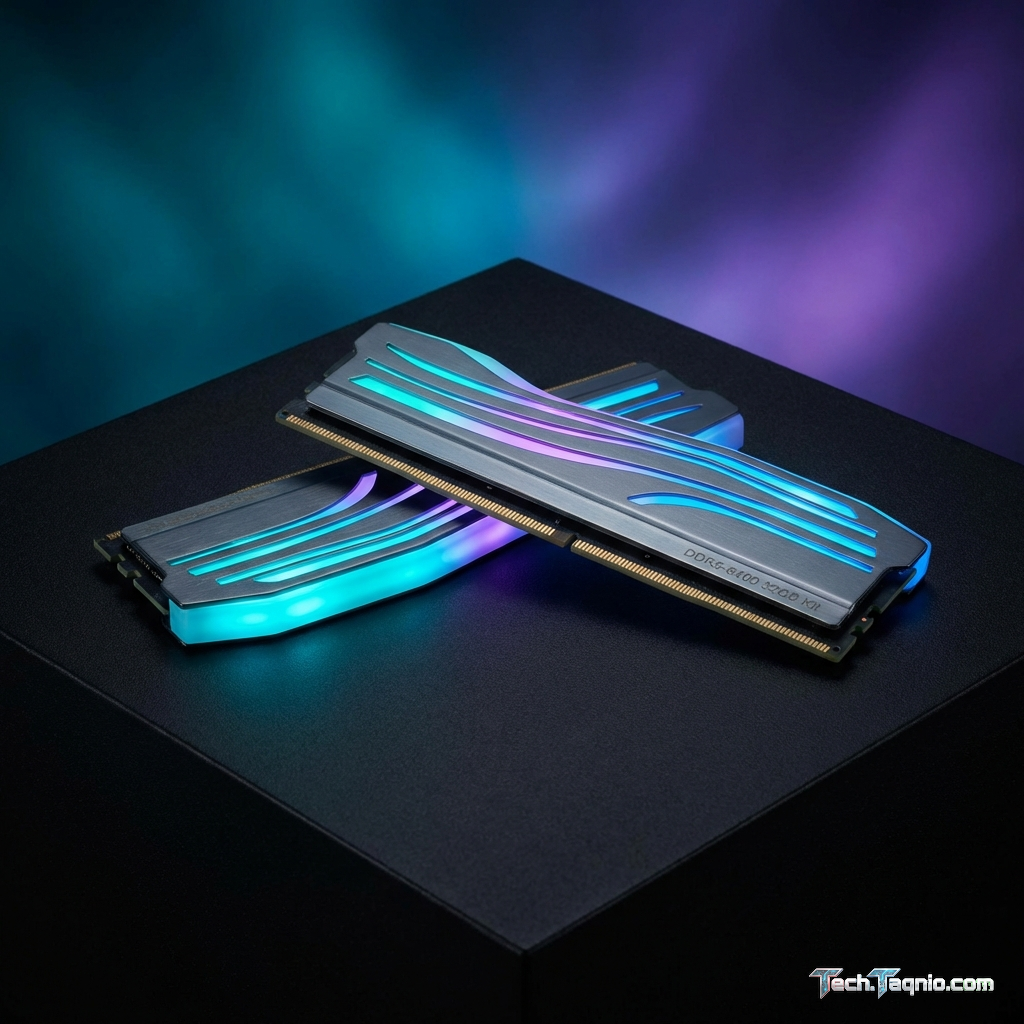
Premium: G.Skill Trident Z5 RGB 32GB (2x16GB) DDR5-6400 CL32 – $130-150
Higher bandwidth for enthusiast builds. RGB aesthetics included. Excellent for Intel DDR5 optimization.
VII. RAM Selection by Build Type
Budget Gaming Build (~$800-1000)
Recommendation: 32GB DDR4-3600 CL16 (~$60)
Reasoning: Maximum value. Performance difference from DDR5 doesn’t justify ~$40-60 premium at this
budget tier where GPU investment matters more.
Mid-Range Gaming Build (~$1200-1500)
Intel: DDR4-3600 for value, DDR5-6000 for performance
AMD: DDR5-6000 CL30 (required for Ryzen 7000)
Reasoning: At this tier, DDR5 investment begins making sense. Balance against GPU budget
priorities.
High-End Gaming Build ($2000+)
Recommendation: 32GB DDR5-6000/6400 CL30-32
Reasoning: High-end builds should use DDR5 for platform optimization and longevity. The premium is
proportionally smaller in expensive builds.
VIII. Common RAM Mistakes
Avoid these frequent errors in gaming RAM selection.
Single-Channel Configuration
Single DIMM configurations halve memory bandwidth, causing significant gaming performance loss. Always use matched
pairs (2x8GB, 2x16GB) for dual-channel operation.
Overspending on Speed
DDR5-7200 provides marginal improvement over DDR5-6000 at substantial price premium. The performance difference
rarely justifies 1.5-2x pricing for high-speed kits.
Ignoring XMP/EXPO
RAM defaults to conservative JEDEC speeds without enabling XMP (Intel) or EXPO (AMD) profiles in BIOS. Enable these
profiles to achieve advertised speeds.
Capacity Over Speed
16GB fast RAM outperforms 32GB slow RAM for gaming, but 32GB at reasonable speeds provides better overall experience.
Don’t sacrifice capacity for extreme speeds, but don’t buy 64GB at slow speeds either.
IX. Conclusion
Gaming RAM selection in 2026 depends primarily on platform requirements and budget priorities. AMD Ryzen 7000
requires DDR5—target 6000 MT/s for optimal performance. Intel platforms offer choice—DDR4 provides value, DDR5
provides maximum performance.
32GB capacity serves current gaming well with headroom for multitasking. 16GB works but may feel constrained. 64GB
provides no gaming benefit for the significant cost increase.
For most gaming builds, invest saved RAM budget into GPU upgrades—the performance impact is substantially larger.
Once baseline RAM requirements are met (32GB, appropriate speed), additional RAM spending provides minimal gaming
benefit.
For complete build guidance, explore our articles on best gaming CPUs 2026 and building a gaming
PC.