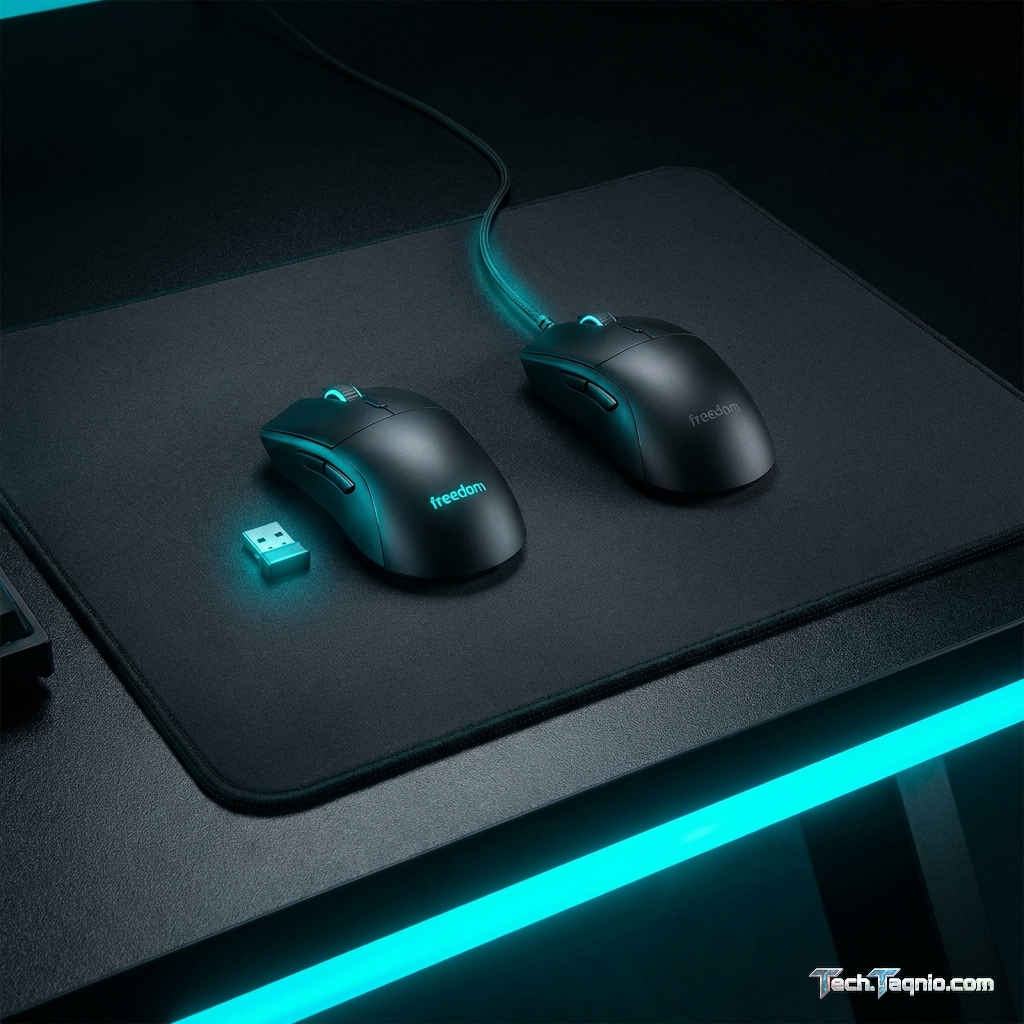
Choosing the right gaming mouse for FPS games can dramatically impact your competitive performance. The difference
between landing headshots consistently and narrowly missing shots often comes down to sensor accuracy, mouse weight,
and ergonomic fit. In the fast-paced world of first-person shooters where milliseconds matter, your mouse becomes an
extension of your aim, translating hand movements into precise in-game actions with zero margin for error.
The gaming mouse market in 2026 has reached unprecedented levels of technological sophistication. Major manufacturers
like Logitech, Razer, and SteelSeries have pushed sensor technology, wireless latency, and weight reduction to new
extremes. Modern gaming mice feature sensors capable of tracking at 30,000 DPI with sub-millimeter precision,
polling rates up to 8000Hz, and weights dropping below 50 grams without sacrificing build quality. Understanding
these specifications and how they translate to real-world gaming performance helps identify the perfect mouse for
your playstyle.
This comprehensive guide examines the best gaming mice for FPS games in 2026, comparing offerings from the three
dominant manufacturers: Logitech, Razer, and SteelSeries. We’ll analyze sensor performance, weight considerations,
shape ergonomics, wireless technology, and value propositions to help you make an informed decision that elevates
your competitive gaming experience.
I. Understanding FPS Gaming Mouse Requirements
Before examining specific products, understanding what makes a mouse suitable for FPS gaming helps establish
evaluation criteria. FPS games demand specific performance characteristics that differ from other gaming genres, and
recognizing these requirements guides better purchasing decisions.
Sensor Technology and Tracking Precision
The sensor represents the heart of any gaming mouse, translating physical movement into digital input. Modern optical
sensors from PixArt and proprietary designs from manufacturers have eliminated the spinning-out issues and tracking
inconsistencies that plagued earlier generations. The PixArt PAW3395 and PAW3950 sensors, along with Logitech’s HERO
25K and Razer’s Focus Pro 30K sensors, deliver flawless tracking that exceeds human capability to distinguish
differences.
DPI (dots per inch) specifications have become marketing numbers that exceed practical utility. While sensors
advertising 30,000 DPI sound impressive, most professional FPS players use settings between 400-1600 DPI combined
with low in-game sensitivity. What matters more than maximum DPI is tracking consistency, pixel-perfect precision,
and zero acceleration or angle snapping that could interfere with muscle memory development.
Polling rate determines how frequently the mouse reports position to the computer. Standard 1000Hz polling (1ms
report interval) remains sufficient for most gamers, but wireless mice now offer 4000Hz and even 8000Hz polling
rates that reduce motion blur and improve input precision in high-refresh-rate scenarios. The practical benefit of
rates above 1000Hz remains debatable, but competitive players seeking every possible advantage appreciate the
option.
Weight Considerations for FPS Performance
Mouse weight has become a critical specification for FPS gaming, with lighter mice generally preferred for faster,
more precise aim adjustments. The physics are straightforward: lighter mice require less force to accelerate and
decelerate, enabling quicker micro-adjustments during tracking and flick shots. However, weight preference
ultimately comes down to individual playstyle and grip type.
Ultra-light mice weighing under 60 grams suit players who prioritize quick flicks and rely on arm aiming for large
movements. These mice reduce fatigue during extended sessions and allow rapid target acquisition. However, some
players find extremely light mice feel insubstantial and prefer slightly heavier options that provide more
controlled movements.
The ideal weight range for most FPS players falls between 50-80 grams, offering a balance between speed and control.
Players who primarily track targets rather than flick may prefer mice closer to 80 grams, while aggressive flick-aim
players typically gravitate toward the 50-60 gram range.
Shape and Ergonomics
Mouse shape affects grip comfort, control precision, and long-session fatigue. Three primary grip styles exist: palm
grip (entire hand resting on mouse), claw grip (fingertips and palm base touching), and fingertip grip (only
fingertips contact the mouse). Different mouse shapes accommodate these grips differently, making shape selection
highly personal.
FPS players often favor ambidextrous symmetrical designs that suit claw and fingertip grips, as these grips offer
more precise micro-adjustments. However, ergonomic right-handed designs can provide superior comfort for palm grip
users during longer sessions. There’s no universally “best” shape—only the best shape for your hand size and grip
style.
II. Logitech Gaming Mice for FPS
Logitech has established itself as a dominant force in competitive gaming peripherals, with their mice appearing
frequently in professional esports tournaments. Their combination of proprietary sensor technology, industry-leading
wireless performance, and build quality has earned widespread acclaim from competitive FPS players.
Logitech G Pro X Superlight 2 – The Professional Standard
The Logitech G Pro X Superlight 2 represents the pinnacle of wireless gaming mouse technology in 2026. Weighing just
60 grams while offering flagship features, this mouse has become the de facto choice for professional FPS players
across multiple esports titles. At a retail price of $159, it commands a premium that its performance justifies.
The HERO 2 sensor delivers 44,000 DPI tracking capability with zero smoothing, acceleration, or filtering. More
importantly, it maintains perfect tracking consistency regardless of surface, speed, or lift-off height settings.
The sensor’s efficiency also contributes to impressive 95-hour battery life on a single charge, eliminating concerns
about mid-session power depletion.
LIGHTSPEED wireless technology provides 1ms response time that matches or exceeds wired connections. Logitech’s
proprietary 4000Hz polling rate (LIGHTSPEED 4K) further reduces input latency for players using high-refresh-rate
monitors. The absence of perceptible wireless lag has made wired mice obsolete for all but the most latency-obsessed
users.
The symmetrical ambidextrous shape measures 125mm x 63.5mm x 40mm, accommodating claw and fingertip grips excellently
while remaining comfortable for palm grip users with medium-sized hands. PTFE mouse feet provide smooth gliding
across cloth and hard surfaces, and the main buttons use optical switches rated for 68 million clicks.
Pros: Industry-leading wireless performance with imperceptible latency, exceptional build quality
despite low weight, 95-hour battery life eliminates charging anxiety, preferred by numerous professional players,
excellent shape for multiple grip styles.
Cons: Premium pricing at $159 places it beyond budget consideration, limited to one DPI button on
bottom of mouse, no RGB lighting (weight saving trade-off), symmetrical shape may not suit those preferring
ergonomic designs.
Logitech G502 X LIGHTSPEED – Feature-Rich Alternative
For players who prefer additional buttons and features over minimal weight, the Logitech G502 X LIGHTSPEED offers
compelling value at $139. Weighing 102 grams with removable weights allowing adjustment up to 130 grams, this mouse
targets players who prioritize versatility over pure lightweight performance.
The G502 X features 11 programmable buttons, a dual-mode scroll wheel (free-spinning and notched), and the same HERO
25K sensor technology found in the Superlight 2. The ergonomic right-handed shape with thumb rest provides
exceptional comfort for palm grip users during marathon gaming sessions.
While heavier than optimal for pure flick-aim FPS gaming, the G502 X excels in tactical shooters where additional
keybinds enhance gameplay. Games like Rainbow Six Siege, Valorant, and tactical modes in various shooters benefit
from quick access to utility abilities and communication options.
Pros: Extensive button customization options, adjustable weight system accommodates preference
variation, excellent ergonomic comfort for right-handed users, reliable LIGHTSPEED wireless, versatile for multiple
game genres.
Cons: Base weight of 102 grams limits agility for flick-intensive gaming, complex shape requires
adjustment period, higher price for features some FPS players don’t need, not suitable for left-handed users.
Logitech G305 LIGHTSPEED – Budget Champion
At $49.99, the Logitech G305 LIGHTSPEED delivers exceptional value for budget-conscious gamers seeking wireless FPS
performance. Using a single AA battery, it achieves 250 hours of continuous use while weighing 99 grams (reducible
to approximately 85 grams with a lithium AAA battery and adapter).
The HERO sensor, while previous-generation compared to Superlight offerings, provides flawless tracking up to 12,000
DPI with zero acceleration or smoothing. For the vast majority of gaming scenarios, sensor performance remains
indistinguishable from more expensive alternatives.
The classic symmetrical shape mirrors the legendary G Pro Wireless design in smaller dimensions, suiting smaller
hands and fingertip grip styles. Build quality exceeds expectations for the price point, though the plastic
construction feels less premium than flagship options.
Pros: Exceptional value with flagship-tier wireless technology, impressive 250-hour battery life,
reliable performance suitable for competitive play, lightweight with battery optimization, readily available and
frequently discounted.
Cons: Requires AA battery rather than built-in rechargeable, previous-generation sensor technology
(though still excellent), limited button options, plastic construction feels less premium, slightly outdated design
language.
III. Razer Gaming Mice for FPS
Razer has aggressively pushed gaming mouse innovation, introducing industry-first technologies like optical switches
and pioneering ultra-lightweight wireless designs. Their Focus Pro sensor technology and HyperSpeed wireless rival
Logitech’s implementations, making Razer mice serious contenders for FPS gaming supremacy.
Razer DeathAdder V3 Pro – Ergonomic Excellence
The Razer DeathAdder V3 Pro combines legendary ergonomic shape refinement with modern ultra-lightweight construction,
weighing just 63 grams while maintaining the comfort the DeathAdder line is known for. Priced at $149, it competes
directly with the G Pro X Superlight 2 from an ergonomic perspective.
The Focus Pro 30K optical sensor delivers tracking precision that matches the best in the industry, with 30,000 DPI
capability, zero acceleration, and advanced surface calibration. Razer’s optical mouse switches provide 0.2ms
response time (90ms faster than mechanical alternatives), eliminating debounce delay for instantaneous click
registration.
HyperSpeed Wireless technology achieves sub-1ms latency comparable to Logitech’s LIGHTSPEED, supporting both 1000Hz
and 4000Hz polling rates. Battery life reaches 90 hours at 1000Hz polling, ensuring days of gaming between charges.
USB-C charging further modernizes the experience.
The ergonomic right-handed shape has been refined over two decades of DeathAdder iterations. The pronounced hump
supports palm grip naturally, while the tapered front accommodates claw grip preferences. At 128mm length, it suits
medium to large hands exceptionally well.
Pros: Arguably the most comfortable ergonomic shape for right-handed users, incredibly light at 63
grams for an ergonomic design, optical switches eliminate click delay, excellent sensor and wireless performance,
90-hour battery life.
Cons: Right-handed only excludes left-handed players, ergonomic shape not ideal for fingertip grip,
premium pricing at $149, minimal button options beyond standard configuration, requires Synapse software for full
customization.
Razer Viper V3 Pro – Lightweight Champion
At just 54 grams, the Razer Viper V3 Pro claims the title of lightest esports-focused wireless gaming mouse from a
major manufacturer. Priced at $159, it directly challenges the G Pro X Superlight 2 with even lower weight while
maintaining competitive specifications.
The Focus Pro 30K sensor provides identical tracking performance to the DeathAdder V3 Pro, with industry-leading
precision and zero acceleration. An 8000Hz polling rate option (via Razer HyperPolling Wireless Dongle, sold
separately) pushes input latency to theoretical minimums, though practical benefits at such extreme polling rates
remain marginal for most users.
The symmetrical low-profile shape measures 127.1mm x 63.9mm x 39.4mm, optimized for claw and fingertip grips favored
by competitive FPS players. The sides feature slightly concave surfaces for secure grip during intense gaming
moments. Optical Gen-3 switches ensure instant click registration with 90 million click lifespan.
Battery life reaches 95 hours at 1000Hz, with quick charging providing 11 hours of use from just 5 minutes of
charging. The mouse supports wireless charging via any Qi-compatible charger, adding convenience for desk setups
with charging pads.
Pros: Lightest major-brand wireless FPS mouse at 54 grams, 8000Hz polling option for latency
enthusiasts, excellent shape for competitive grip styles, industry-leading optical switch technology, wireless
charging support.
Cons: Very low profile may not suit palm grip users, 8000Hz polling requires additional dongle
purchase, aggressive weight reduction may feel too light for some, premium pricing, symmetrical shape lacks
ergonomic right-hand optimization.
Razer Basilisk V3 Pro – Customization King
The Razer Basilisk V3 Pro targets gamers who want extensive customization options without sacrificing modern
performance. At $159 and weighing 112 grams, it prioritizes features over weight reduction, making it suitable for
tactical FPS players who value button access.
13 programmable buttons, including a sniper button for temporary DPI switching, provide extensive customization
possibilities. The hallmark scroll wheel features HyperScroll Tilt mode with 90 individual resistance settings and a
tactile-to-free-spin toggle. This scroll wheel alone makes the Basilisk V3 Pro unique in the market.
Razer Chroma RGB lighting illuminates 11 zones, integrating with the broader Chroma ecosystem for synchronized
lighting effects. While RGB adds weight and battery consumption (reducing life to 25 hours with lighting on), the
visual enhancement appeals to gamers who value aesthetics alongside performance.
Pros: Unmatched customization with 13 programmable buttons, innovative HyperScroll wheel with
adjustable resistance, excellent ergonomic comfort, full Razer Chroma RGB integration, suitable for multiple game
genres.
Cons: 112-gram weight limits agility for flick-intensive FPS gaming, RGB lighting significantly
reduces battery life, complex feature set overwhelming for minimalist preferences, right-handed only, premium
pricing for feature set some won’t use.
IV. SteelSeries Gaming Mice for FPS
SteelSeries has carved a reputation for reliable gaming peripherals with less aggressive marketing than competitors.
Their Rival and Aerox lines offer competitive performance with distinctive design choices, appealing to gamers
seeking alternatives to the Logitech-Razer duopoly.
SteelSeries Aerox 5 Wireless – Versatile Lightweight
The SteelSeries Aerox 5 Wireless balances lightweight design with additional functionality, weighing 74 grams while
offering 9 programmable buttons. At $139, it provides more buttons than typical lightweight mice without severely
compromising weight.
The TrueMove Air sensor delivers 18,000 DPI tracking with 1-to-1 input response and zero acceleration. While
specifications don’t lead the industry, practical tracking performance satisfies competitive FPS requirements.
SteelSeries’ Quantum 2.0 wireless achieves sub-1ms latency comparable to competitors.
The honeycomb shell design, featuring aqua barrier protection against dust and moisture, enables the low weight while
maintaining structural integrity. The unique IP54-rated water resistance allows cleaning under running water—an
industry-first feature that addresses hygiene concerns.
A 5-way rocker switch on the left side provides unique control options, enabling weapon switching, ability
activation, or other bindings in accessible positions. This switch differentiates the Aerox 5 from standard
lightweight mice.
Pros: IP54 water resistance for easy cleaning, unique 5-way rocker switch adds versatility,
respectable 74-gram weight for feature set, 180-hour battery life exceeds competitors, comfortable ergonomic shape.
Cons: Honeycomb design polarizes opinion (exposes internal components), sensor specifications don’t
lead industry, rocker switch requires adjustment period, limited aftermarket accessories, less brand recognition in
esports.
SteelSeries Prime Wireless – Esports Focus
Designed with direct esports athlete input, the SteelSeries Prime Wireless at $129 offers a focused feature set
optimized for competitive gaming. At 80 grams, it balances lightweight goals with solid build quality, featuring
magnetic optical switches for instant response.
The TrueMove Pro sensor, developed in partnership with PixArt, delivers 18,000 DPI tracking with true 1-to-1
response. SteelSeries emphasizes “no smoothing, acceleration, or angle snapping” in their sensor implementation,
prioritizing pure tracking fidelity over specification inflation.
Prestige OM optical magnetic switches combine the tactile feel of mechanical switches with optical speed, rated for
100 million clicks. The crisp actuation and consistent feel has earned praise from competitive players who value
tactile feedback during intense moments.
Battery life reaches 100+ hours, partially enabled by the absence of RGB lighting. The minimalist aesthetic focuses
entirely on performance, with only an illuminated scroll wheel providing visual accent.
Pros: Designed with professional esports input, optical magnetic switches offer excellent feel, 100+
hour battery life exceeds most competitors, focused feature set eliminates distractions, comfortable shape for
extended sessions.
Cons: 80-gram weight higher than lightest competitors, limited to 5 buttons (minimal customization),
TrueMove Pro sensor doesn’t lead specifications, understated design may lack appeal for RGB enthusiasts, smaller
brand presence in competitive scenes.
V. Comparison Tables: Logitech vs Razer vs SteelSeries
Direct specification comparison helps identify the best option for specific priorities. The following tables compare
flagship models across key performance categories relevant to FPS gaming.
| Mouse Model | Weight | Sensor | Max Polling Rate | Price |
|---|---|---|---|---|
| Razer Viper V3 Pro | 54g | Focus Pro 30K | 8000Hz | $159 |
| Logitech G Pro X Superlight 2 | 60g | HERO 2 | 4000Hz | $159 |
| Razer DeathAdder V3 Pro | 63g | Focus Pro 30K | 4000Hz | $149 |
| SteelSeries Aerox 5 Wireless | 74g | TrueMove Air | 1000Hz | $139 |
| SteelSeries Prime Wireless | 80g | TrueMove Pro | 1000Hz | $129 |
| Logitech G305 LIGHTSPEED | 99g | HERO | 1000Hz | $49 |
| Mouse Model | Shape Type | Battery Life | Best For |
|---|---|---|---|
| Razer Viper V3 Pro | Symmetrical Low-Profile | 95 hours | Claw/Fingertip Grip FPS |
| Logitech G Pro X Superlight 2 | Symmetrical Medium | 95 hours | All Grip Styles FPS |
| Razer DeathAdder V3 Pro | Ergonomic Right-Hand | 90 hours | Palm Grip Comfort Gaming |
| SteelSeries Aerox 5 Wireless | Ergonomic Right-Hand | 180 hours | Versatile Gaming with Buttons |
| SteelSeries Prime Wireless | Ergonomic Right-Hand | 100+ hours | Competitive Esports |
| Logitech G305 LIGHTSPEED | Symmetrical Compact | 250 hours | Budget FPS Gaming |
VI. Grip Styles and Mouse Shape Selection
Matching mouse shape to grip style significantly impacts comfort and control precision. Understanding your natural
grip and selecting compatible shapes prevents disappointing purchases and enhances long-term satisfaction.
Palm Grip Recommendations
Palm grip users rest their entire hand on the mouse, with fingers extended along buttons and the palm base contacting
the rear. This grip favors larger mice with pronounced rear humps that support the palm naturally. Movement
originates from the arm and wrist rather than fingers.
The Razer DeathAdder V3 Pro stands as the premier choice for palm grip FPS gaming, combining ergonomic excellence
with competitive weight. Its refined shape supports the palm at optimal angles while maintaining precise control.
For even larger hands, the SteelSeries Prime Wireless offers a substantial feel with excellent palm support.
Palm grip users typically prioritize comfort over raw speed, making the DeathAdder’s 63-gram weight optimal—light
enough for quick movements while substantial enough for controlled tracking. The pronounced curves guide hand
placement naturally, reducing adjustment periods.
Claw Grip Recommendations
Claw grip combines palm base contact with arched fingers, creating a claw-like posture. This grip enables precise
fingertip adjustments while maintaining stability through palm contact. Medium-sized mice with moderate rear humps
suit claw grip best.
The Logitech G Pro X Superlight 2’s symmetrical shape accommodates claw grip excellently, with appropriate height and
width for comfortable arching. Its 60-gram weight permits quick micro-adjustments driven by fingertip movement while
the palm base provides stability.
The Razer Viper V3 Pro’s low profile also suits claw grip, particularly for players preferring aggressive finger
positioning. Its ultra-light 54-gram weight amplifies fingertip control precision, though some may find the low rear
insufficient for comfortable palm contact.
Fingertip Grip Recommendations
Fingertip grip involves only fingertips contacting the mouse, with no palm or palm base contact. This grip offers
maximum precision and agility but requires exceptional control. Small to medium, lightweight mice with low profiles
suit fingertip grip best.
The Razer Viper V3 Pro’s combination of low profile (39.4mm height) and ultra-light weight (54 grams) makes it ideal
for fingertip grip. Minimal mass enables instant directional changes, while the low profile prevents interference
with the palm.
The Logitech G305, despite its budget positioning, serves fingertip grip well at smaller hand sizes. Its compact
dimensions and affordable price make it an excellent entry point for experimenting with fingertip grip techniques.
VII. Professional Player Mouse Preferences
Examining professional esports player equipment choices provides insight into what performs under competitive
pressure. While individual preferences vary, patterns emerge that indicate proven performers.
Valorant Professional Scene
Valorant’s precision-focused gameplay demands mice that enable consistent headshots at various ranges. The Logitech G
Pro X Superlight series dominates professional Valorant, with variations of this mouse appearing across teams
worldwide. The symmetrical shape and 60-gram weight suit Valorant’s requirement for quick flicks combined with
precise tracking.
The Razer DeathAdder V3 Pro appears frequently among players preferring ergonomic shapes, particularly those
transitioning from Counter-Strike where DeathAdder variants have long been popular. The updated lightweight design
maintains the comfort legacy players expect while modernizing performance.
Counter-Strike 2 Professional Scene
Counter-Strike players often display more conservative equipment choices, with proven performers maintained across
game iterations. The DeathAdder shape’s dominance in Counter-Strike history has continued into CS2, though the V3
Pro’s reduced weight represents significant modernization.
The Logitech G Pro X Superlight similarly appears throughout CS2 professional play, with its balanced characteristics
suiting the game’s demanding precision requirements. Players migrating from wired mice have largely adopted these
flagship wireless options without perceiving performance degradation.
Apex Legends and Movement Shooters
Movement-intensive games like Apex Legends favor ultra-lightweight mice that enable rapid direction changes during
complex movement tech. The Razer Viper V3 Pro’s 54-gram weight particularly suits this playstyle, enabling the quick
flicks and tracking adjustments movement shooters demand.
The G Pro X Superlight 2 also performs excellently in this category, balancing lightweight design with versatile
shape accommodation. Players valuing extreme weight reduction gravitate toward the Viper V3 Pro, while those
prioritizing shape versatility often prefer the Superlight 2.
VIII. Making Your Final Decision
Selecting the ideal FPS gaming mouse requires honest assessment of preferences, hand characteristics, and budget
constraints. Consider these factors systematically to identify your best match.
Budget Considerations
The Logitech G305 LIGHTSPEED at $49.99 proves that competitive FPS gaming doesn’t require flagship investment. Its
wireless performance satisfies all but the most demanding requirements, and sensor quality matches practical needs
perfectly. Budget-conscious buyers should start here and upgrade only if specific limitations become apparent.
Mid-range options around $129-$139 (SteelSeries Prime Wireless, Aerox 5 Wireless) offer excellent value with modern
features. These mice suit competitive players who want proven performance without flagship premiums.
Flagship mice at $149-$159 (G Pro X Superlight 2, DeathAdder V3 Pro, Viper V3 Pro) deliver the best possible
performance with cutting-edge technology. Competitive players seeking every possible advantage and willing to invest
accordingly find these options compelling.
Shape Priority
If ergonomic comfort ranks as your primary concern, the Razer DeathAdder V3 Pro’s refined shape provides unmatched
palm support while maintaining competitive weight. No other mouse combines ergonomic excellence with sub-65-gram
weight as effectively.
If shape versatility matters more, the Logitech G Pro X Superlight 2’s symmetrical design accommodates multiple grip
styles without major compromises. Its shape works acceptably for most users, even if not optimally for any specific
grip.
If minimal weight supersedes other factors, the Razer Viper V3 Pro’s 54-gram construction enables unmatched agility
for players who’ve trained their aim around ultra-light mice.
Ecosystem Integration
Consider existing peripheral ecosystems when selecting brands. Razer Synapse, Logitech G Hub, and SteelSeries GG
software platforms each offer unique features for unified peripheral management. RGB synchronization, macro sharing,
and settings profiles integrate more seamlessly within single-brand ecosystems.
IX. Conclusion
The best gaming mouse for FPS games in 2026 depends on individual grip style, hand size, and performance priorities.
The Logitech G Pro X Superlight 2 stands as the most versatile flagship option, combining lightweight design with
shape accommodation that suits most players. For ergonomic preference, the Razer DeathAdder V3 Pro delivers
unmatched comfort at competitive weight. Budget buyers find exceptional value in the Logitech G305 LIGHTSPEED, which
proves flagship pricing isn’t necessary for competitive performance.
Each recommended mouse represents the pinnacle of its category’s design philosophy. Whether prioritizing absolute
weight reduction, ergonomic comfort, feature versatility, or budget efficiency, current options deliver performance
that satisfies competitive FPS requirements. The wireless technology gap has closed entirely, making cable-free
gaming the new standard for competitive play.
Take time to evaluate grip style honestly and consider hand dimensions when selecting shapes. The perfect mouse
exists for every player—finding it requires matching personal characteristics to design strengths rather than
following specifications alone. Invest in quality that matches your competitive aspirations, and your mouse will
enhance rather than limit your FPS gaming potential.
For a complete gaming setup, explore our guides on choosing the right gaming
mousepad and selecting
mechanical keyboards for gaming.